
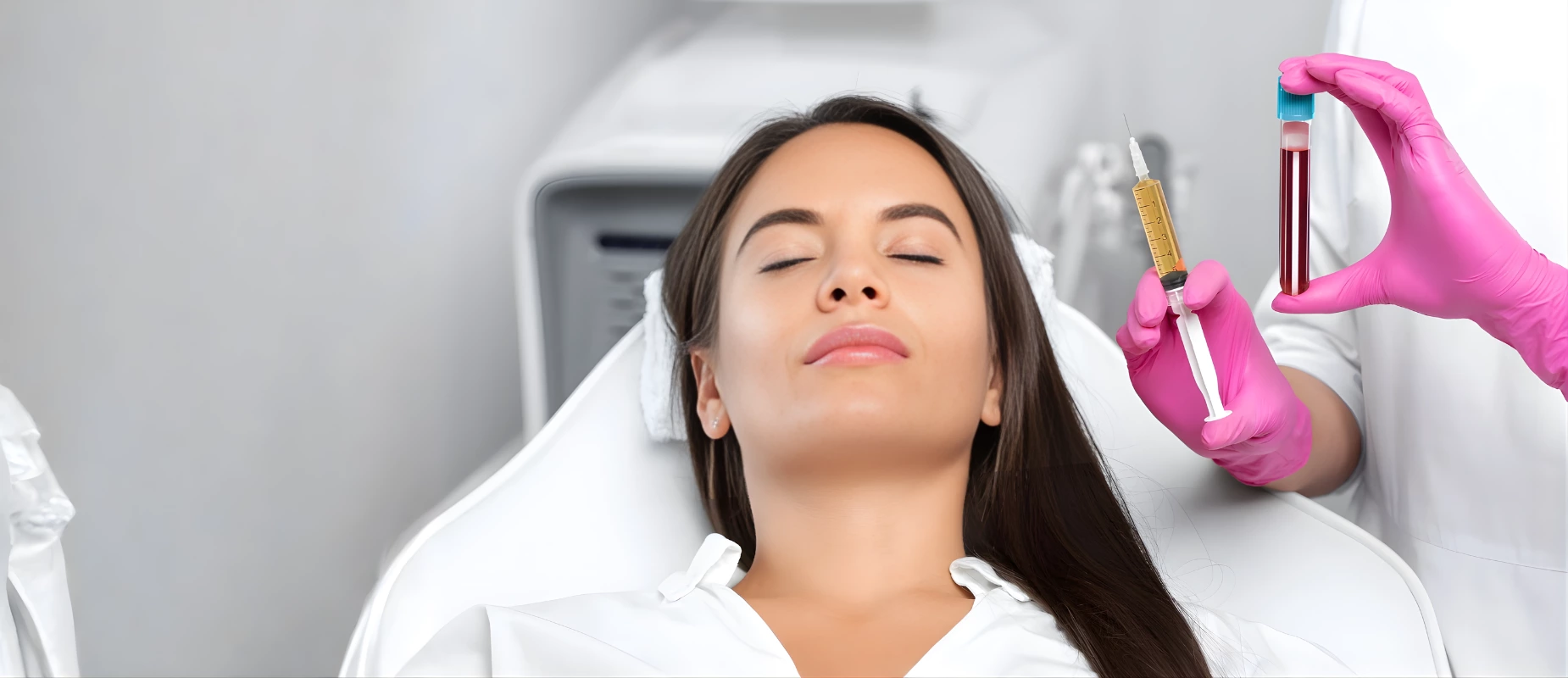
What is platelet-rich plasma?
Revitalizing with PRP has become one of the most sought-after natural rejuvenation approaches in modern aesthetics. Platelet-Rich Plasma therapy uses the body’s own platelets to stimulate collagen production and tissue regeneration.
Revitalizing the skin and promoting a youthful appearance is a common goal. PRP offers a natural option because it works entirely with your biology — no synthetic substances or foreign materials are injected.
Clinical research on platelet-rich plasma in regenerative medicine continues to document its role in tissue repair and its growing range of aesthetic applications.

Why PRP is different
Unlike injectables that add synthetic volume, PRP works with your body’s natural healing mechanism. Because it comes from your own blood, the risk of allergic reaction or adverse side effects is minimal.
If you want to explore this treatment professionally, you can learn more about the approach on our PRP treatment in Chicago IL service page.
The PRP treatment process
PRP therapy begins with a blood sample drawn from the patient. The blood is processed to separate the platelet-rich plasma, which contains a high concentration of platelets and growth factors.
Blood Draw
A small sample of blood is collected, similar to a routine lab test.
→
Centrifugation
The sample spins to separate plasma from red blood cells.
→
Isolation
The platelet-rich plasma is extracted and concentrated.
→
Application
The PRP is injected into targeted areas to stimulate repair.
These platelets are responsible for healing wounds and regenerating tissues. The PRP is injected into targeted areas, stimulating collagen production and tissue rejuvenation. The AAD’s overview of PRP therapy notes that the treatment is generally well tolerated with minimal downtime.
Rejuvenation results and advantages
PRP therapy provides numerous benefits for individuals seeking skin rejuvenation. Here are the three most significant advantages.
Improved Skin Texture
Stimulates collagen production to smooth fine lines and improve overall skin tone.
Minimal Risk
Because PRP uses your body’s own plasma, the risk of allergic reaction is virtually zero.
No Downtime
Return to daily activities immediately after treatment — no recovery period needed.
Natural rejuvenation from within
PRP can improve skin texture, reduce wrinkles and fine lines, and enhance overall skin tone. Because it uses the body’s own natural healing mechanism, results look gradual and natural.
It is a safe and effective procedure that requires no downtime. Most patients notice improvement in the weeks following treatment as collagen remodels.

Applications of PRP therapy
PRP is versatile and can be used across multiple aesthetic and regenerative applications. Here are the three most common.
Facial Rejuvenation
Improves skin texture, tone, and firmness while softening fine lines and wrinkles.
Hair Restoration
Stimulates hair follicles and supports regrowth for individuals experiencing thinning.
Combination Therapy
Often paired with microneedling or laser treatments for enhanced results.
For a broader look at aesthetic treatments and aftercare, you can explore Elite Chicago Spa to see the full range of services available.
PRP therapy FAQs
What exactly is PRP therapy?
PRP stands for platelet-rich plasma. It is derived from your own blood, concentrated to contain more platelets and growth factors, then injected into targeted areas to stimulate tissue repair and collagen production.
Is PRP painful?
Most people describe mild pressure or a small pinch during injections. A topical numbing cream may be applied for comfort. The procedure is generally well-tolerated.
How many PRP sessions will I need?
Most patients see optimal results after 2 to 3 sessions spaced several weeks apart. The exact number depends on your treatment area and goals.
Is there downtime after PRP?
Minimal. Most people return to daily activities immediately. Some mild redness or swelling may occur at injection sites and typically fades within a day or two.
When will I see results?
Results develop gradually over 4 to 12 weeks as tissue regenerates and collagen remodels. Improvement is progressive rather than instant.
Is PRP safe?
Yes. Because PRP is derived from your own blood, the risk of allergic reaction or rejection is virtually zero. Side effects are typically limited to mild redness or swelling at injection sites.
- PubMed. Platelet-rich plasma in regenerative medicine: clinical research. Accessed 2026.
- American Academy of Dermatology (AAD). Platelet-rich plasma: what to know. Accessed 2026.
- Journal of Cosmetic Dermatology. PRP for skin rejuvenation: mechanisms and outcomes. Accessed via PubMed.
These references support the mechanism, safety, and clinical application of platelet-rich plasma for skin rejuvenation.
Experience PRP therapy in Chicago
At our spa, we pride ourselves on offering the highest quality PRP therapy. Our skilled professionals ensure precise injections and a comfortable experience, prioritizing safety and hygiene in all treatments.
Visit our Spa in Chicago IL and book your appointment to experience the rejuvenating effects of PRP therapy firsthand.